

How to Train Puppies: Everything You Need to Know

Got a new addition to the family? Need to know how to train a puppy?
Then you've come to the right place!
Training a puppy is one of the first things to consider when you bring a new four-legged friend home.
However, training a puppy is a task that requires a lot of dedication and consistent effort. But don’t worry! Here at Diusa Pet, we’ve put together a comprehensive guide that you can refer to at any time.
Keep reading to learn more.
How to Welcome a Puppy into Your Home
What excitement when a new puppy comes home!
However, this is also a very delicate time, and it’s important to welcome your new four-legged friend in the best way possible.
Training a puppy requires patience and consistency. Starting right away and respecting the puppy’s pace is the key to effective training. Early training lays the foundation for a peaceful and harmonious relationship, paving the way for more advanced training in the future.
In the first few days, your puppy needs to adjust to its new surroundings, and it’s perfectly normal for it to seem shy and reserved. That’s why, during this initial phase, we recommend avoiding having too many people over, as this might overwhelm your puppy. It’s important for your puppy to get used to your family and its new surroundings first.
Also, try to set aside a corner of the house just for him, where you can put his bed, his toys, and anything else that will make the space cozy and peaceful for the newcomer.

When should you start training a puppy?
The answer is: right away! However, it’s essential to respect their pace, without overwhelming them or expecting them to stay focused for too long.
We recommend starting with short sessions, lasting about 5–10 minutes, followed by breaks or free play.
But what kinds of things can you teach your puppy?
- respond to the main commands;
- where to use the restroom;
- how to behave during the game;
- socialization;
- how to behave at home when left alone.
How to Train Puppies? 3 Simple Tips to Follow
Here are 3 tips to help you get off to the best start on your educational journey:
- Start with short sessions: puppies lose focus easily;
- Focus on the positive: always try to end the training session with an exercise that the puppy has mastered and that you know he can do well. This will help reinforce a positive attitude in the puppy;
- Reward him generously, but avoid giving too many treats: the concept of reward should always be at the heart of training. Our advice is to use affection, play, and treats. But be careful not to overdo the treats! Also, once your puppy has learned something, switch up the type of reward to prevent potential weight gain.
How to teach your puppy where to go to the bathroom
If your puppy hasn't completed its vaccination series, we recommend that you avoid areas and contact with dogs whose health status you don't know.
While you wait for your puppy’s vaccinations to be completed, you might consider teaching him to go to the bathroom on a puppy pad. Here’s how to do it in three simple steps:
- Find their favorite spot: for example, if your puppy has already urinated indoors, place the pad right in that corner (which is likely their favorite spot);
- If he pees somewhere else, lead him to the potty mat. He needs to understand that this is the designated spot for his business. Once your dog is done, reward him with treats and cuddles. This will help him start making positive associations and learn to do it on his own;
- Learn to recognize when your puppy needs to go to the bathroomso you can take him to the potty pad right away (don’t forget the reward!).
Get your puppy used to the leash
Leash training is an essential part of raising a puppy. As they grow, dogs that pull on the leash can be difficult to handle. That’s why it’s important to start right away by teaching your puppy to walk using a “soft” leash.
Show your puppy right from the start that you’re in charge. It shouldn’t be the puppy who decides which way to go—it should be you. To help your puppy learn to follow you and pay attention to your movements, make sure the leash stays loose at all times. If the puppy starts pulling, stop immediately. Don’t start walking again until the puppy comes back to you and the leash relaxes.
Let's look at a practical example.
A good exercise is to leave a treat or his favorite toy on the grass. The puppy will probably want to run toward it, but if he pulls, hold him back or step further away. Only when he moves calmly at your pace should you move closer to the treat. This way, the puppy will learn that he has to control himself to get what he wants.
How to teach a puppy to stay home alone
Teaching your puppy to stay home alone is very important, not only to prevent separation anxiety but also to keep him from associating your absence with a negative experience.
To train your puppy to stay home alone, you can follow this step-by-step process:
- Start with short separations: move to another room every now and then, making sure your puppy can’t follow you;
- Short outings of 5–10 minutes to gradually get him used to your absence;
- Positive distractions: Give your puppy something to chew on. This will help him relax while you're away.

Teaching Your Puppy Not to Bite While Playing
To explore the world, puppies love to play, especially with their mouths (which is the best way for them to pick things up and examine them).
To prevent your puppy from biting too hard or causing damage around the house, it’s essential to train him right from the start by teaching him what’s known asbite inhibition.
For example, if you’re playing with your puppy and he bites you, stop playing by pulling away. Make it clear to him that he’s hurt you, and ignore him for a few minutes before playing together again. It will take a while for the puppy to understand, but eventually he’ll learn that if he wants to keep playing with you, he needs to be more careful.
Training Your Puppy: Socialization
Let’s start with this premise: the more your puppy is exposed to different things in the first few months of life, the less likely he’ll be to be scared or bothered by the outside world later on.
Any examples?
The washing machine, bicycles on the street, the TV, the sound of the vacuum cleaner, people, escalators, and so much more!
Try to show him something new every day. You could use your daily walks as an opportunity to introduce your puppy to sounds, people, and places he hasn’t encountered yet.
However, our advice is to avoid overwhelming your puppy with too many new experiences in a short period of time.
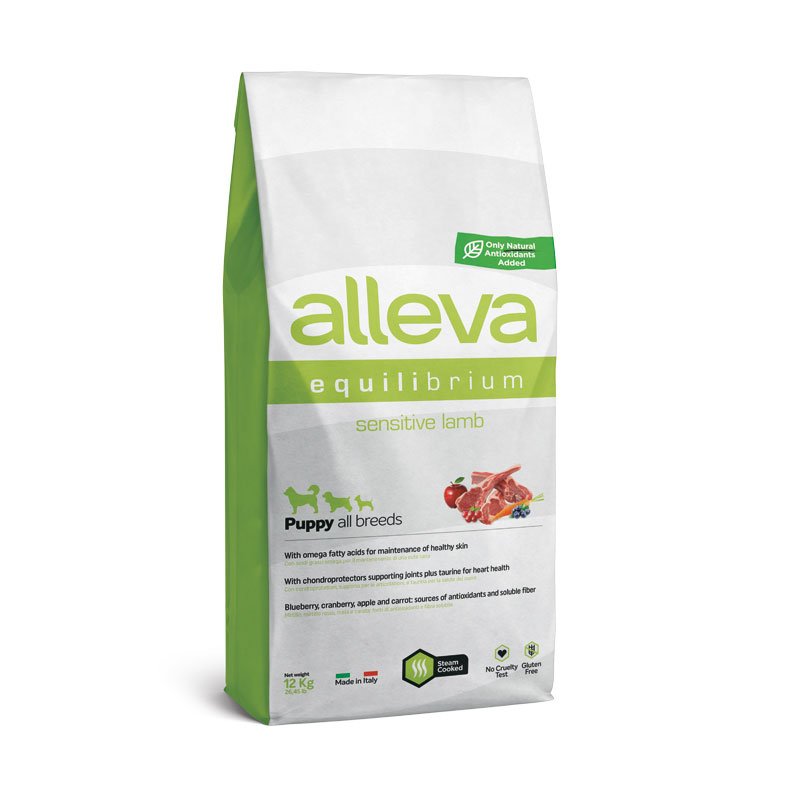
Puppy food: which one should you choose?
Are you looking for the right food for your puppy?
The Alleva line Alleva developed special formulas for puppies.


Follow us on social media to stay up to date on the latest news!
The post "How to Train Puppies: Everything You Need to Know " first appeared on Dog and Cat Food | Alleva .
