Gastrointestinal Cat Food: Which One to Choose for Your Cat's Needs
by WebAlive Studio Aug. 4, 2026
Diet is one of the most important tools in the nutritional management of cats with specific gastrointestinal needs. For this reason, in the presence of certain clinical conditions, the veterinarian may recommend a dietetic food formulated to meet specific nutritional needs and support the patient’s management plan.
Choosing a "gastrointestinal" cat food means understanding what nutritional characteristics make it suitable for specific needs and why it must be used according to your veterinarian’s instructions.
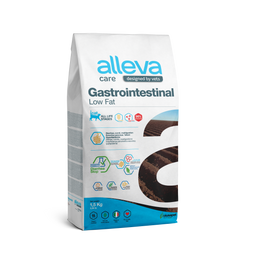
In this guide, we’ll explore when a gastrointestinal diet may be recommended, what factors to consider before making a choice, and the characteristics of Alleva Care Gastrointestinal Low Fat, a formula developed to meet the specific nutritional needs of cats.
Gastrointestinal Food vs. Traditional Food: What Are the Differences?
A gastrointestinal diet is not simply a "milder" food, but a formula developed to meet the specific nutritional needs of cats with digestive issues. As we saw in thearticle on gastrointestinal diets for dogs, these formulations share some key characteristics, including highly digestible ingredients, functional fibers, prebiotics, and a strong emphasis on the quality of raw materials.
In the cat, however, there are certain physiological and nutritional characteristics that require a different approach than that used for dogs. While dogs primarily need to restore proper digestive function, in cats it is equally important to maintain their overall nutritional status and prevent a reduced food intake from compromising their metabolic balance.
Gastrointestinal formulations for cats therefore have certain specific characteristics.
Higher energy density
When a cat experiences nausea, intestinal upset, or a loss of appetite, it tends to eat less than usual. Feline gastrointestinal diets are often formulated with a higher energy density, to ensure an adequate caloric intake even when daily food intake is limited.
Note: This aspect is particularly important because cats are especially sensitive to prolonged fasting, which can lead to the onset of metabolic conditions—some of which can be severe—such as hepatic lipidosis.
High palatability
In general, cats are more selective than dogs when it comes to choosing food, and this tendency can become even more pronounced when they have gastrointestinal issues. That’s why specialized formulas place particular emphasis on palatability, focusing on the quality of raw materials, aroma, texture, and kibble size to promote regular food intake.
Highly digestible proteins and an adequate protein intake
As an obligate carnivore, the cat has higher protein requirements than other species and needs a constant supply of essential amino acids. Feline gastrointestinal diets generally maintain an adequate protein content, prioritizing highly digestible sources of high biological quality, thereby help maintain muscle mass without unnecessarily increasing the digestive burden.
Fibers Formulated for Intestinal Balance
The fiber content is also studied with particular attention. In fact, gastrointestinal formulations for cats tend to use moderate amounts of fiber, prioritizing fermentable fibers and prebiotics, with the goal of support the gut microbiota and promote regular bowel movements without increasing the risk of constipation, a condition to which cats may be naturally predisposed.
A nutritional supplement designed to meet a cat's needs
In feline clinical practice, it is not uncommon for intestinal, pancreatic, and hepatobiliary problems to occur simultaneously. Some gastrointestinal formulations, particularly those Low Fat, are developed with these nutritional needs in mind, offering veterinarians a suitable option for managing complex clinical conditions.
Understanding these differences allows you to make a more informed choice when selecting the most suitable product.
See also the article “Pet Food in Italy: Alleva Vision Alleva the Well-being of Dogs and Cats.”
In what situations might a veterinarian recommend a gastrointestinal diet?
A veterinarian may recommend a gastrointestinal diet when a cat has specific nutritional needs related to the digestive system. The choice does not depend on a single symptom, but on the clinical evaluation, the animal’s history, and, when necessary, diagnostic tests.
Depending on the condition diagnosed, the veterinarian may recommend a gastrointestinal diet in cases of:
- intestinal absorption disorders, for which highly digestible formulations are recommended;
- digestive disorders that require specific nutritional support;
- Recovery periods following gastrointestinal issues, when it is advisable to promote nutritional recovery;
- abnormalities in lipid metabolism, in cases where a low-fat food is recommended.
It is important to remember that not all gastrointestinal foods have the same characteristics. Some formulations are designed to meet different nutritional needs, and the choice always depends on the individual cat’s clinical condition. For this reason, it is essential to follow your veterinarian’s recommendations, as they will be able to identify the food best suited to your cat’s nutritional needs.
Alleva Care Gastrointestinal Low Fat: Nutritional Support for Specific Gastrointestinal Needs
When your veterinarian determines that your cat needs a gastrointestinal diet, it is important to choose a formula designed to meet your cat’s specific nutritional needs.
Alleva Care Gastrointestinal Low Fat is a complete, low-grain dietetic food for cats of all ages, formulated to reduce intestinal absorption disorders and support lipid metabolism in cases of hyperlipidemia, to be used exclusively as directed by a veterinarian.
The formula is characterized by highly digestible ingredients and a low fat content—nutritional characteristics designed to meet the needs of cats requiring specific dietary support. The recipe is also enriched with select selected, including psyllium, and with prebiotics such as FOS, XOS, and inulin, ingredients chosen to help maintain a balanced gut microbiota and support regular bowel movements.
Rounding out the formulation are functional plant-based ingredients and a combination of selected yeasts, included in accordance with the nutritional philosophy of the product line Alleva Care, which places particular emphasis on the quality of raw materials and the development of foods designed to meet specific nutritional needs.
As with all veterinary dietary foods, Alleva Care Gastrointestinal Low Fat should be selected and used as part of the nutritional plan established by your veterinarian, who will assess its suitability based on the clinical condition and individual needs of your cat.

Nutritional Characteristics and Benefits
✅ Highly digestible proteins and carbohydrates: with carefully selected, easily digestible ingredients
✅ High palatability: thanks to the quality of the raw materials and the careful processing at the plant
✅ Reduced fat content: recommended for regulating lipid metabolism
✅ Balance of the gut microbiota and regular bowel movements: with psyllium and prebiotics (FOS, XOS, inulin)
✅ Intestinal Barrier Integrity: with selected yeasts to support intestinal defenses
✅ Support for loose stools: thanks to soluble fiber and highly digestible ingredients
✅ Functional plant ingredients: featuring a blend of Ayurvedic plants with astringent properties
Directions for Use
Use Alleva Care Gastrointestinal Low Fat, always following your veterinarian’s instructions and the recommended feeding amounts based on your cat’s specific needs.
If you change your diet, it is advisable to make a gradual transition over the course of about 7 days, gradually mixing increasing amounts of the new food with decreasing amounts of the usual food, until the switch is complete.
Always leave fresh, clean water freely available for your cat to ensure proper hydration. Store the product in a cool, dry place, keeping the package tightly closed after each use.
Recommended usage period
The duration of use of Alleva Care Gastrointestinal Low Fat must always be determined by a veterinarian based on the cat’s needs.
As a general guideline, the product can be used:
- Initially, up to 12 weeks, or for life in cases of chronic pancreatic insufficiency;
- Initially, up to 2 months in cases of hyperlipidemia.
Before extending the period of use, it is advisable to consult your veterinarian.
Recommended Daily Intake
Administer Alleva Care Gastrointestinal Low Fat in accordance with the daily amounts indicated on the package. Nutritional requirements may vary depending on factors such as age, weight, level of physical activity, environment, and the cat’s overall condition.
To help manage your diet more effectively, the daily ration may be divided into two or more meals, unless otherwise directed by your veterinarian.
Would you like to learn more about the ingredients, nutritional values, and feeding guidelines? Check out the complete product sheet → Alleva Care Gastrointestinal Low Fat
Gastrointestinal Cat Food: A Choice Based on Your Cat's Needs
When the veterinarian recommends a gastrointestinal diet, choosing a complete formula developed with carefully selected ingredients is an important step in the nutritional journey. Alleva Care Gastrointestinal Low Fat was created specifically to offer a complete dietary food, formulated to meet the specific nutritional needs of cats, with particular attention to the quality of the recipe and raw materials.
📲 Follow us on social media to stay up to date on the latest news!
Frequently Asked Questions
What is Gastrointestinal cat food used for?
Gastrointestinal food is a dietary food formulated to meet the specific nutritional needs of cats with digestive system issues. As recommended by a veterinarian, it may be indicated to reduce intestinal absorption disorders or to provide nutritional support for specific gastrointestinal conditions. Products such as Alleva Care Gastrointestinal Low Fat are developed specifically for these nutritional purposes.
When Should You Feed Your Cat Gastrointestinal Food?
A gastrointestinal diet should be administered only when recommended by a veterinarian, following a clinical evaluation of the cat. The duration of use depends on the animal’s condition and the veterinarian’s instructions, who will also determine the most appropriate duration of use.
Share