

Got a new puppy? A complete guide to welcoming it into your home

Bringing a new puppy home brings excitement and joy, but also raises many questions. It’s a special moment that marks the start of a new routine and a bond that will grow stronger every day.
In this guide, we’ve compiled the best tips to help you prepare for your puppy’s arrival, manage those first few days together, and properly organize your home, feeding, and training routines—so you can welcome your puppy with confidence and provide them with a safe, calm environment tailored to their needs right from the start.
How to Prepare for the Arrival of a New Puppy
Bringing a puppy home begins even before they arrive. In fact, preparing in advance helps you enjoy this moment with greater peace of mind and allows the puppy to feel safe right from the start.
Remember that everything will be new to him: smells, sounds, people. Having a well-organized environment reduces stress and makes it easier for him to adjust.
Here's what you need!
Essential items for welcoming a puppy
Before your pet arrives, make sure you have everything you need to meet their basic needs:
- a dog bed or a soft rug, placed in a quiet spot;
- bowls for water and food;
- toys suitable for puppies, which are good for both playtime and teething;
- a leash and collar or harness (preferably adjustable);
- Hygiene pads, which are especially useful during the first few weeks.
Having these items ready lets your puppy know that there’s a special place just for him, where he can feel welcome.
If available, in the first few days it may be helpful to provide the baby with a blanket or a soft object that retains a familiar scent—such as that of the mother or the home environment—to help the baby cope with the separation more calmly.
Get your home ready
Seen through a puppy’s eyes, the home is a place full of temptations and potential dangers. That’s why it’s essential to do a quick safety check before your puppy arrives.
First of all, keep electrical cords, small objects that could be swallowed, cleaning products, or potentially toxic substances. If possible, initially restrict access to certain areas of the house so as not to overwhelm him with stimuli.
At the same time, choose a quiet spot, away from noise and constant foot traffic, where he can rest undisturbed. It will be his safe haven when he’s tired or needs to feel secure.
You might also be interested in the article "How to Train Puppies: Everything You Need to Know."

The first few days with a new puppy at home
The first few days are crucial for laying the foundation of the bond between you and your puppy. During this time, your puppy may seem very curious, but also insecure or disoriented (don’t worry—this is a completely normal reaction!).
At this stage , it’s important to remain calm and patient, and avoid overwhelming him with new experiences right away. Giving him time to settle in will help him feel more at ease and gain confidence in his new surroundings.
Give your puppy time to settle in
When your puppy first comes home, he needs to explore at his own pace. Avoid forcing interactions or immediately engaging him in constant play. Observe his behavior and respect his moments of rest and downtime.
If there are children in the house, explain to them the importance of a calm approach: slow movements, a soft voice…and no sudden cuddles! This helps the puppy feel safe and builds trust right from the start.
The Importance of a Daily Routine
Establishing a routine from the very beginning is one of the best ways to help your puppy settle in. Regular schedules for meals, rest, and walks help him understand what to expect and feel more at ease.
Over time, this predictability will give them a sense of security and contribute to their emotional well-being.
See also the article “Exercising with Your Dog: How Much Physical Activity?”
Feeding Your Puppy
Puppies have specific nutritional needs: they require food that is easy to digest, provides the energy necessary for growth, and contains carefully balanced nutrients designed to support them during this rapid yet delicate stage of development.
A diet suitable for puppies is essential because it helps:
- to promote healthy, balanced, and gradual growth;
- promote bone and muscle development;
- support the immune system;
- maintain vitality and balance during daily activities.
Choosing carefully what to put in your puppy’s bowl means laying a solid foundation for guiding him with care and tenderness through his first few months of life.
Alleva has developed specific formulas for puppies to ensure their all-around well-being. Discover our lines dedicated to puppies:

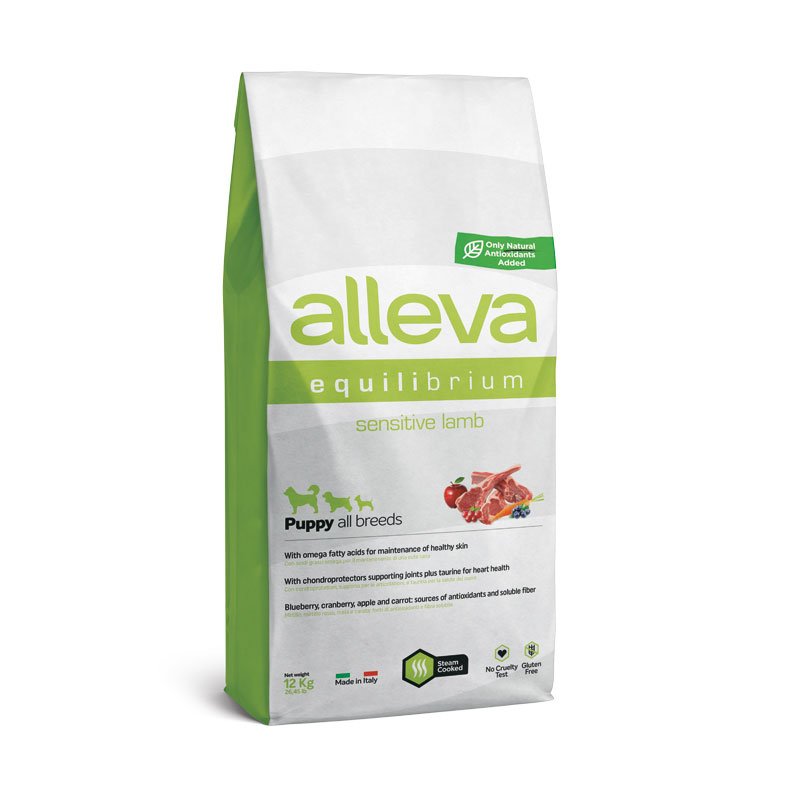
👉 Discover the entire Alleva Equilibrium lineEquilibrium puppies

Holistic Dog Food Holistic Puppy Mini/Medium (Fish + Hemp & Aloe Vera) 5 kg

👉 Discover the entire Alleva Holistic lineHolistic puppies

Natural Dog Food Natural Puppy All Breeds (Lamb & Pumpkin) 12 kg

Natural Dog Food Natural Chicken & Pumpkin) – Puppy Maxi 2 kg
👉 Discover the entire Alleva Natural lineNatural puppies
How many times a day does a puppy eat?
Puppies eat several times a day, usually 3 or 4 meals, spread out evenly throughout the day. This schedule helps them digest their food better and maintain steady energy levels.
Establishing a routine for mealtimes also helps him feel secure: knowing that food is always served at roughly the same time helps your puppy feel safe. Also, remember to always leave fresh, clean water out for him—a small but essential step for his well-being.
First visit to the vet: when should you take your pet?
It is very important to take your puppy to the vet as soon as possible for a complete health checkup. In addition, the vet will be the one to set up the vaccination and deworming schedule, starting with the first dose immediately after the puppy arrives home and scheduling subsequent doses as needed.
A new puppy in the house and the start of a lifelong bond
Bringing a new puppy home is the start of a journey filled with discoveries, little surprises, and lots of excitement. You might feel a bit unsure during the first few days, but that’s completely normal. Every act of care, every decision made calmly and thoughtfully, helps build your puppy’s sense of security and strengthens your bond.
With patience, consistency, and care —from feeding to house rules, from health to playtime— you’ll help your puppy feel safe and grow up happy.
Follow us on social media for more pet-related tips!
The post " New Puppy in the House? A Complete Guide to Welcoming It Home " first appeared on Dog and Cat Food | Alleva .
